Contact Us

For NRI Customers
(To Buy a Policy)


(If you're our existing customer)

For Online Policy Purchase
(New and Ongoing Applications)
Branch Locator

For Existing Customers
(Issued Policy)
Fund Performance Check
Login
 Customers

 Employees
 Partner



Quick links
What does your emergency fund look like?

June 03, 2026

Table of Content
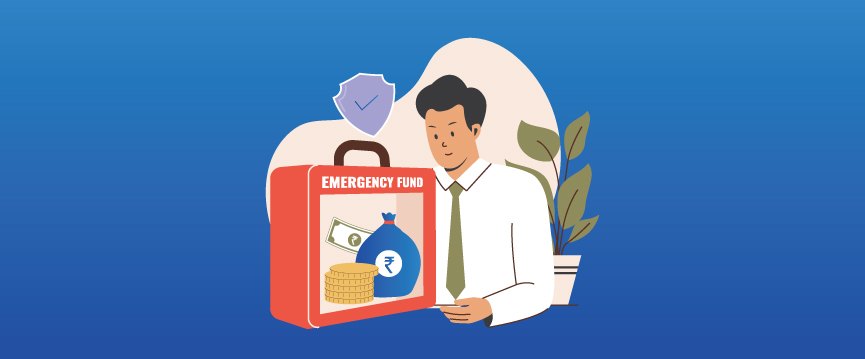
Every Indian family has a routine and a rhythm to protect. School mornings, grocery runs, medicines, and monthly bills. Seniors have their own rhythm too, walks, check-ups, and family calls. Life feels steady until a sudden expense breaks that rhythm. A medical need arrives, a house repair shows up, or income pauses briefly. In those moments, an emergency fund is not a luxury. It is peace of mind kept aside in advance.
Many people think an emergency fund is only for young earners. That is a myth that can hurt families and seniors alike. Families need it to protect children and dependents. Seniors need it to protect dignity and independence. It stops you from borrowing in panic and selling investments early. It also reduces stress at home, because money worries spread quickly. Ask yourself a simple question: if a surprise came today, what would you do? If the answer is borrowing or breaking long-term savings, the fund needs work.
Emergency fund is your calm in sudden moments
An emergency fund is money kept for surprises, not for planned goals. It is for hospital visits, appliance breakdowns, and sudden travel needs. It is also for short income gaps, when work slows down unexpectedly. In Indian homes, surprises can come from many directions. A parent may need treatment, a child may need coaching fees early, or a relative may need help. Even festivals can bring extra spending if you are not careful. The emergency fund protects you from turning every surprise into a crisis.
Without this fund, families often depend on credit cards and quick loans. That can become a habit that is hard to break. High-interest debt grows quietly and eats future savings. People also break deposits or sell investments abruptly. That is not great, because you may sell during weak markets and lock losses. The emergency fund keeps your long term money untouched. It gives you time to think and respond calmly. It protects your sleep too, which matters more than we admit.
For seniors, the fund is also about control. You do not want to call children for every bill. You may have loving children, but you still want dignity. A cushion keeps small emergencies private and manageable.
Families need layers, not one single pot
Many families keep all money in one place mentally. Salary comes in, expenses go out, and the rest is invested. Then an emergency hits and everything gets mixed up. The education fund gets utilised, and the retirement fund gets disturbed. This mixing creates stress and weakens long term security.
Think in layers instead: an emergency fund, savings for near-term goals, and retirement planning. Each layer has its own purpose and time horizon. The emergency layer is for sudden needs and short gaps. The savings layer is for goals that are closer, like home upgrades or family events. The retirement layer is for the later years when salary stops. When these layers are separate, decision-making becomes easier.
This separation also protects relationships at home. Money fights often happen because priorities get confused. A clear structure reduces blame and panic. It also helps children learn good money habits by watching you. In Indian culture, financial habits pass down silently through daily choices. A layered approach is a strong example to set.
Life insurance is the protection glue
Emergency funds handle smaller shocks, but some risks are too large. A serious illness, disability, or early death can break the plan completely. When a main earner is lost, the family needs money immediately. Bills continue, loans continue, and emotions run high. In that phase, families often cash out investments to survive. They may sell gold meant for a daughter’s future or break savings meant for retirement. That is painful and it is avoidable.
Life insurance is the tool that transfers this high-impact risk away. It protects the family’s long-term goals even during the worst times. It can replace income and keep a home loan on track. It can ensure children’s education continues without disruption. It can support ageing parents without forcing compromises. It can also protect a spouse from sudden financial vulnerability.
For seniors, life insurance can still matter for legacy planning and family stability. For families with dependents, it is a non-negotiable foundation. It does not replace an emergency fund, it strengthens the whole structure. You do not want your emergency fund to become your only defence. Life insurance gives the larger safety net that emergencies cannot cover.
Savings plans and retirement plans as cushion
Once the emergency layer is built, consistency becomes the next focus. Savings plans can help create disciplined saving habits. They can support near term goals without dipping into emergency funds. Many people struggle with irregular saving because life gets busy. A structured savings approach keeps the habit steady.
Retirement planning needs even more discipline because it is long term. Many Indian seniors depend on children because retirement planning started late. That dependence can create guilt on both sides. A strong retirement plan protects independence and self respect. It also gives you freedom to make choices, where to live, how to spend time, and how to support family. Retirement planning is not only about money, it is about dignity.
Savings and retirement plans also reduce pressure on your children. Children want to help, but they also face their own costs. When seniors are prepared, the whole family breathes easier. It is a quiet gift to the next generation.
Final takeaways
An emergency fund should not excite you, it should reassure you. It should sit quietly and wait for the day you need it. Keep it accessible and separate from daily spending. Review it once in a while, especially after life changes. If expenses rise or responsibilities increase, adjust your layers. Keep nominees updated and keep documents easy to locate. These details matter when families are under stress.
Look at your emergency fund today and be honest. Does it cover the unexpected without forcing loans or selling investments? If not, start building it with patience. Pair it with life insurance protection so the base stays strong. Add savings discipline for near term goals and retirement security for later years. Together, these create a cushion that supports the present and protects the future.
ARN: DM/03/26/33094
 Term Plan Articles
Term Insurance in Popular Cities
Investment Articles
Savings Articles
Life Insurance Articles
Tax Articles
Retirement Articles
ULIP Articles
Subscribe to get the latest articles directly in your inbox
Health Plans Articles
Child Plans Articles
Popular Calculators
Insurance Advisor Articles
 Francis Rodrigues
Francis Rodrigues has a decade long experience in the insurance sector, and as SVP, E-Commerce and Digital Marketing, HDFC Life, manages the online sales channel, as well as digital and performance marketing. He has had hands-on experience in setting up sales channels and functional teams from scratch over a career spanning 2 decades.

 Written By:
Here's all you should know about life insurance.
We help you to make informed insurance decisions for a lifetime.

HDFC Life
Reviewed by Life Insurance Experts
HDFC LIFE IS A TRUSTED LIFE INSURANCE PARTNER
We at HDFC Life are committed to offer innovative products and services that enable individuals live a ‘Life of Pride’. For over two decades we have been providing life insurance plans - protection, pension, savings, investment, annuity and health.

Popular Searches
- Term Insurance Calculator
- Investment Plans
- Investment Calculator
- Investment for Beginners
- Best Short Term Investments
- Best Long Term Investments
- 5 year Investment Plan
- savings plan
- ulip plan
- retirement plans
- health plans
- child insurance plans
- group insurance plans
- income tax calculator
- bmi calculator
- compound interest calculator
- income tax slab
- Income Tax Return
- what is term insurance
- Ulip vs SIP
- tax planning for salaried employees
- HRA Calculator
- Annuity From NPS
- Retirement Calculator
- Pension Calculator
- nps vs ppf
- short term investment plans
- safest investment options
- one time investment plans
- types of investments
- best investment options
- best investment options in India
- Term Insurance for Housewife
- Money Back Policy
- 1 Crore Term Insurance
- life Insurance policy
- NPS Calculator
- Savings Calculator
- life Insurance
- Gratuity Calculator
- Zero Cost Term Insurance
- critical illness insurance
- itc claim
- deductions under 80C
- section 80d
- Whole Life Insurance
- benefits of term insurance
- types of life insurance
- types of term insurance
- Benefits of Life Insurance
- Endowment Policy
- Term Insurance for NRI
- Term Insurance for Women
- Term Insurance for Self Employed
- Benefits of Health Insurance
- Health Insurance for Senior Citizens
- Health Insurance for NRI
- Best Term Insurance Plan for 1 Crore
- personal accident insurance
- Annuity Calculator
- Life Insurance Calculator
- Term Insurance Comparison
- Digital Life Insurance
- Child Education Planner
- GST on Term Insurance
- Term insurance for Diabetics
- Term Insurance for Doctors
- Term Insurance for Overweight
- Term Insurance for Below Poverty Line
- Home Loan EMI Calculator
- EMI Calculator
- Personal Loan EMI Calculator
- Car Loan EMI Calculator