Contact Us

For NRI Customers
(To Buy a Policy)


(If you're our existing customer)

For Online Policy Purchase
(New and Ongoing Applications)
Branch Locator

For Existing Customers
(Issued Policy)
Fund Performance Check
Login
 Customers

 Employees
 Partner



Quick links
 :1800-266-9777


What is ETF (Electronic Funds Transfer)?
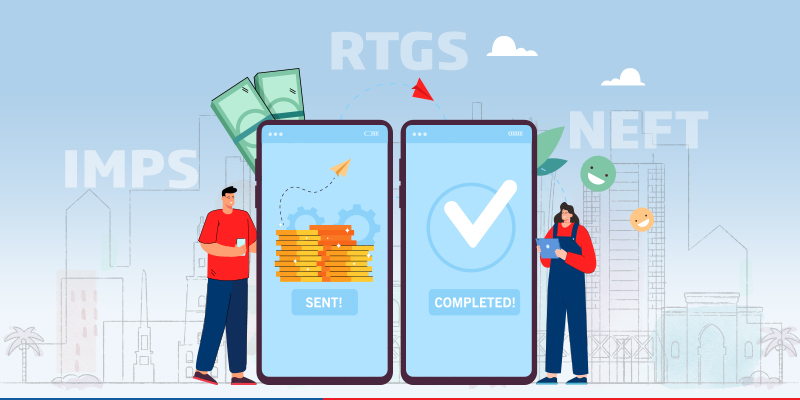

Table of Content
Types of Electronic Funds Transfer in India
Following are the types of Electronic Fund Transfer in India
Electronic fund transfer through IMPS
Electronic fund transfer through RTGS
Electronic fund transfer through NEFT
Electronic fund transfer through UPI
Direct Deposit
Credit and Debit Cards Transactions
ATM Transactions
Online Payment Systems
Wire Transfers
ACH Direct Payments
Here are a Few Electronic Methods Available for Transferring Funds Between Two Accounts:
In the aftermath of demonetisation, people are more likely to use different types of electronic funds transfer mechanisms to make monetary transactions. Mobile and laptop devices make it convenient to conduct online fund transfers via mobile devices, enabling users to conduct transactions from the comfort of their homes or workplaces. By utilising IFSC Codes, these methods overcome geographical limitations, ensuring seamless money transfers.
For example, when transferring funds to an HDFC Bank account at the Vasant Vihar Branch in New Delhi, specifying the HDFC Bank IFSC Code of that branch is crucial.
However, choosing the best money transfer method can be difficult. To make an informed decision, it is important to consider factors such as transfer limits, time, and costs. Here are some methods for transferring money electronically between accounts:
Transactions conducted within the same bank between your own linked accounts.
Account transactions within the same bank involving different accounts.
Transferring money to other bank accounts through NEFT.
Transferring money between accounts in different banks through RTGS.
Transfers of money to diverse accounts using IMPS.
Following are the Types of Electronic Funds Transfer in India
Electronic fund transfer through IMPS:
Electronic fund transfer through RTGS:
Electronic fund transfer through NEFT:
Electronic fund transfer through UPI:
Direct Deposit:
Credit and Debit Cards Transactions:
ATM Transactions:
Online Payment Systems:
Wire Transfers:
ACH Direct Payments:
IMPS or the Immediate Payment Service is the type of electronic fund transfer that comes in handy when money has to be transferred immediately to the beneficiary account. IMPS facility can be availed even on bank holidays or weekends when the offline banking operations are closed. The transfer can be done through ATMs, mobile phones or using standard net-banking. This facility is open around the clock and gives customers access to electronic fund transfer at all times. The details that are needed are- Name and account details of the beneficiary, MMID (Mobile Money Identifier) number of the beneficiary, IFSC code of the beneficiary, the amount etc.
RTGS or Real Time Gross Settlement is the mode of electronic fund transfer wherein a minimum of Rs. 2 Lac can be sent to a beneficiary's account. The branches through which RTGS is to be done (i.e. both the sender as well as the receiver's branches) must have the facility of RTGS enabled to be able to carry out the transactions. There is a particular duration for RTGS and the transferred amount takes about 30 minutes to be deposited in the beneficiary's account. The details that are needed for RTGS are - name and account details of the sender, name of the beneficiary, account details of the beneficiary, IFSC code, amount to be transferred etc.
NEFT or National Electronic Fund Transfer is the most commonly used electronic fund transfer medium in India. Depending on the amount to be transferred, banks may charge Rs 2.50 to Rs 25 for the transaction. NEFT facility can be availed of only during the working hours of the banks and remains closed during bank holidays or weekends when the banks are not functional. There is no upper capping on the amount that can be transferred and the details required are- beneficiary's name and account details, IFSC code of the beneficiary's bank branch etc.
By using UPI-enabled applications, you can effortlessly conduct transactions (up to Rs 1 lakh) with any smartphone. This simplifies the money transfer process, resulting in a quicker transaction. It's important to note that users are not required to provide credit card numbers or bank account information. Moreover, funds can be transferred in real-time at any time.
The UPI platform does not charge any fees for person-to-person money transfers. Prior to this change, a fee of Rs 15 was charged to merchants when transferring money. The charge was removed after demonetisation.
Transferring funds electronically can be used for a wide variety of purposes. Business owners and employers alike benefit from direct deposit when it comes to settling invoices and paying employees. Besides sending money to friends and family, individuals can also use electronic bank transfers to transfer funds between their own accounts. It's important to keep in mind, however, that the process does not happen instantly and typically takes 2-3 business days.
Payments made with a credit or debit card are types of electronic funds transfer (EFTs). The EFT types payment method is used whether you're buying items in a physical store, online, or by phone. Despite the fact that funds may take a few days to clear, the EFT payment system automatically verifies the availability of funds, essentially validating the transaction immediately.
Although cash is received in a tangible form from an ATM, it also constitutes a type of electronic funds transfer. Your ATM communicates with your bank in order to ensure there are funds available before dispensing the cash.
Online purchases can be made with credit and debit cards, but there are other options as well. A secure online payment system facilitates both online purchases and invoice settlement through a protected connection, facilitating the settlement of invoices digitally as well. Among these systems is Square Online Payments, which enables businesses to receive payments quickly.
While wire transfers involve the sending of cash, they remain fundamentally electronic because the sender provides the funds at a bank or wire transfer facility. Transferring funds electronically ensures that the recipient, who may be located anywhere in the world, receives the funds as soon as they are available.
The Automated Clearing House (ACH) network allows for electronic fund transfers between financial institutions using ACH Direct Payments. A variety of transactions can be incorporated into these payments, such as bill payments, purchases, and fund transfers.
All ACH transfers, except for direct deposits, are considered to be Electronic Funds Transfers (EFTs). The ACH network is adaptable and widely used in electronic financial transactions, as evidenced by the comprehensive categorisation of ACH direct payments.
HDFC Life offers numerous term insurance plans that have been formulated for a complete financial security of your loved ones and for ensuring that their future stays protected at all times, even in your absence.
FAQs on Types of Electronic Funds Transfer in India
Q: What are the different types of electronic fund transfers?
EFTs, NEFTs, RTGSs, and IMPSs are different types of electronic funds transfers.
Q: Do businesses have to offer EFT payments?
For convenience, businesses often accept EFT payments but are not obligated to do so.
Q: Is UPI an electronic fund transfer?
Yes, UPI is an electronic fund transfer.
Q: What are the advantages of electronic fund transfer?
Among the advantages of electronic fund transfer are its speed, convenience, security, and accessibility.
Q. What are the 4 most common types of electronic fund transfer?
There are four common types of transfers: internal transfers, NEFT, RTGS, and IMPS.
Related Articles:
- Key Factors to Consider When Buying a Term Plan
- Growing Together, Saving Together: Financial Tips for Married Couples
- How do I choose the right investment plan?
- 10 Most Frequently Asked Questions about ULIP
- How to Secure Your Financial Future with a 15-Lakh Investment Plan?
Need Help to Buy a Right Plan?

Our expert will assist you in buying a right plan for you online.
Reach us between 9 AM - 10 PM IST.
For existing policy related assistance, click here.
A certified expert of HDFC Life will help you.

*99.72% Claim Settlement Ratio For FY 2025-2026

~4.6 Cr. Number Of Lives Insured For FY 2025-2026
Disclaimer: By submitting your contact details, you agree to HDFC Life's Privacy Policy and authorize ...Read More
*99.72% Claim Settlement Ratio For FY 2025-2026
~4.6 Cr. Number Of Lives Insured For FY 2025-2026

 Francis Rodrigues
Francis Rodrigues has a decade long experience in the insurance sector, and as SVP, E-Commerce and Digital Marketing, HDFC Life, manages the online sales channel, as well as digital and performance marketing. He has had hands-on experience in setting up sales channels and functional teams from scratch over a career spanning 2 decades.

 Written By:
Here's all you should know about life insurance.
We help you to make informed insurance decisions for a life time.

HDFC Life
Reviewed by Life Insurance Experts
HDFC LIFE IS A TRUSTED LIFE INSURANCE PARTNER
We at HDFC Life are committed to offer innovative products and services that enable individuals live a ‘Life of Pride’. For over two decades we have been providing life insurance plans - protection, pension, savings, investment, annuity and health.

Popular Searches
- Term Insurance Calculator
- Investment Plans
- Investment Calculator
- Investment for Beginners
- Best Short Term Investments
- Best Long Term Investments
- 5 year Investment Plan
- savings plan
- ulip plan
- retirement plans
- health plans
- child insurance plans
- group insurance plans
- income tax calculator
- bmi calculator
- compound interest calculator
- income tax slab
- Income Tax Return
- what is term insurance
- Ulip vs SIP
- tax planning for salaried employees
- HRA Calculator
- Annuity From NPS
- Retirement Calculator
- Pension Calculator
- nps vs ppf
- short term investment plans
- safest investment options
- one time investment plans
- types of investments
- best investment options
- best investment options in India
- Term Insurance for Housewife
- Money Back Policy
- 1 Crore Term Insurance
- life Insurance policy
- NPS Calculator
- Savings Calculator
- life Insurance
- Gratuity Calculator
- Zero Cost Term Insurance
- critical illness insurance
- itc claim
- deductions under 80C
- section 80d
- Whole Life Insurance
- benefits of term insurance
- types of life insurance
- types of term insurance
- Benefits of Life Insurance
- Endowment Policy
- Term Insurance for NRI
- Term Insurance for Women
- Term Insurance for Self Employed
- Benefits of Health Insurance
- Health Insurance for Senior Citizens
- Health Insurance for NRI
- Best Term Insurance Plan for 1 Crore
- personal accident insurance
- Annuity Calculator
- Life Insurance Calculator
- Term Insurance Comparison
- Digital Life Insurance
- Child Education Planner
- GST on Term Insurance
- term insurance plan
The Unit Linked Insurance products do not offer any liquidity during the first five years of the contract. The policyholders will not be able to surrender or withdraw the monies invested in Unit Linked Insurance Products completely or partially till the end of fifth year.
Unit Linked Life Insurance products are different from the traditional insurance products and are subject to the risk factors. The premium paid in Unit Linked Life Insurance policies are subject to investment risks associated with capital markets and the NAVs of the units may go up or down based on the performance of fund and factors influencing the capital market and the insured is responsible for his/her decisions. HDFC Life Insurance Company Limited is only the name of the Insurance Company, The name of the company, name of the contract does not in any way indicate the quality of the contract, its future prospects or returns. Please know the associated risks and the applicable charges, from your Insurance agent or the Intermediary or policy document of the insurer. The various funds offered under this contract are the names of the funds and do not in any way indicate the quality of these plans, their future prospects and returns.
ARN- INT/ED/02/24/8671
